
Sources for Beaumont Previous Residents
A house-history search needs an era plan. Modern ownership begins with the Riverside Assessor and Recorder. Occupancy evidence comes from the verified Beaumont criss-cross sample, census schedules, newspapers, obituaries, and library or archive inquiries. Probate and vital records can explain a death or estate transfer. City permits can date a physical change. The table distinguishes what each source covers and where the next request goes.
| Source | Years covered | Where held | What it shows |
|---|---|---|---|
| Recorder online index | January 1, 1974 to present | Riverside County Web Self Service | Recorded parties, dates, document and instrument identifiers |
| Earlier deed books and indexes | Before 1974; start not verified | Recorder office or archive | Earlier grantor and grantee chain |
| Assessor annual roll | Current annual snapshot | Assessor public computers or office | Owner and parcel data as of January 1 |
| Haines Criss-Cross sample | 1976, 1980, 1985 at one address | Official Beaumont City Phase I ESA | Address-to-name and business lines |
| EDR Digital Archive sample | 1992 at one address | Official Beaumont City Phase I ESA | Address-to-name and business lines |
| Census schedules | Released through 1950 | NARA and partner databases | Household at a census date |
| Probate cases | Most July 1994 to present online | Riverside Superior Court | Estate, petition, heir, and filed-party clues |
| Permits and Sanborn maps | Local coverage not verified | City Planning and library inquiry | Physical change and address-era context |
Exact printed city-directory runs, Sanborn sheet years, and pre-1974 deed-book arrangements were not verified. A past-resident search should keep those gaps visible rather than fill them with a generic catalog claim.
Beaumont Previous Residents in Deeds
The deed chain is the backbone of a past-resident search for ownership. Start with the APN and current owner from the county office, or with a known recorded grantee. Search the owner in the Recorder index, find the acquisition deed, read the grantor, and then search that seller as an earlier grantee. Keep the legal description at every step because a street label can change or collide with another subdivision.
- Normalize the current street address and obtain the APN through County Property Search or a tax bill.
- Open RivCoView and the assessor map to record boundaries, adjoining parcels, subdivision, lot or block, and legal-map reference.
- Confirm the current owner at a Riverside Assessor public office or locate a recorded deed that names the grantee.
- Search the grantee in the Recorder index, then preserve the grantor, recording date, instrument number, and legal description.
- Repeat the grantor-as-prior-grantee search back to 1974, then ask the Recorder about earlier books, indexes, or film.
- Grantor
- The party transferring an interest in the recorded instrument.
- Grantee
- The party receiving the interest in that instrument.
- Chain of title
- A connected sequence of recorded transfers for the same land.
- Legal description
- The recorded land identity, such as subdivision, lot and block, or metes and bounds.
The Riverside County Property Search is an address or APN starting point. The RivCoView parcel viewer supplies geometry and nearby parcel context. Neither replaces the deed or office roll for a named owner.
Beaumont Previous Residents After 1974
Riverside Recorder documents are indexed online from January 1, 1974. That is an online boundary, not proof that older deeds are absent. Move earlier research to the Recorder office, books, indexes, microfilm, or archive assistance. County Clerk documents begin online January 1, 1893, but that clerk cutoff covers fictitious business names, environmental filings, notaries, and registrations rather than a full deed history.
The county supports online, mail, and in-person search and copy routes. The County Clerk registry page says mail research needs the exact business name and, when relevant, owner name, a legal-size self-addressed stamped envelope, and payment. It lists $2 for a plain or certified statement copy and a response within ten working days. That route can add a business or address clue, but it should not be mistaken for a deed chain.
The Riverside Clerk registry instructions show how a county search shifts from web index to office or mail procedure.
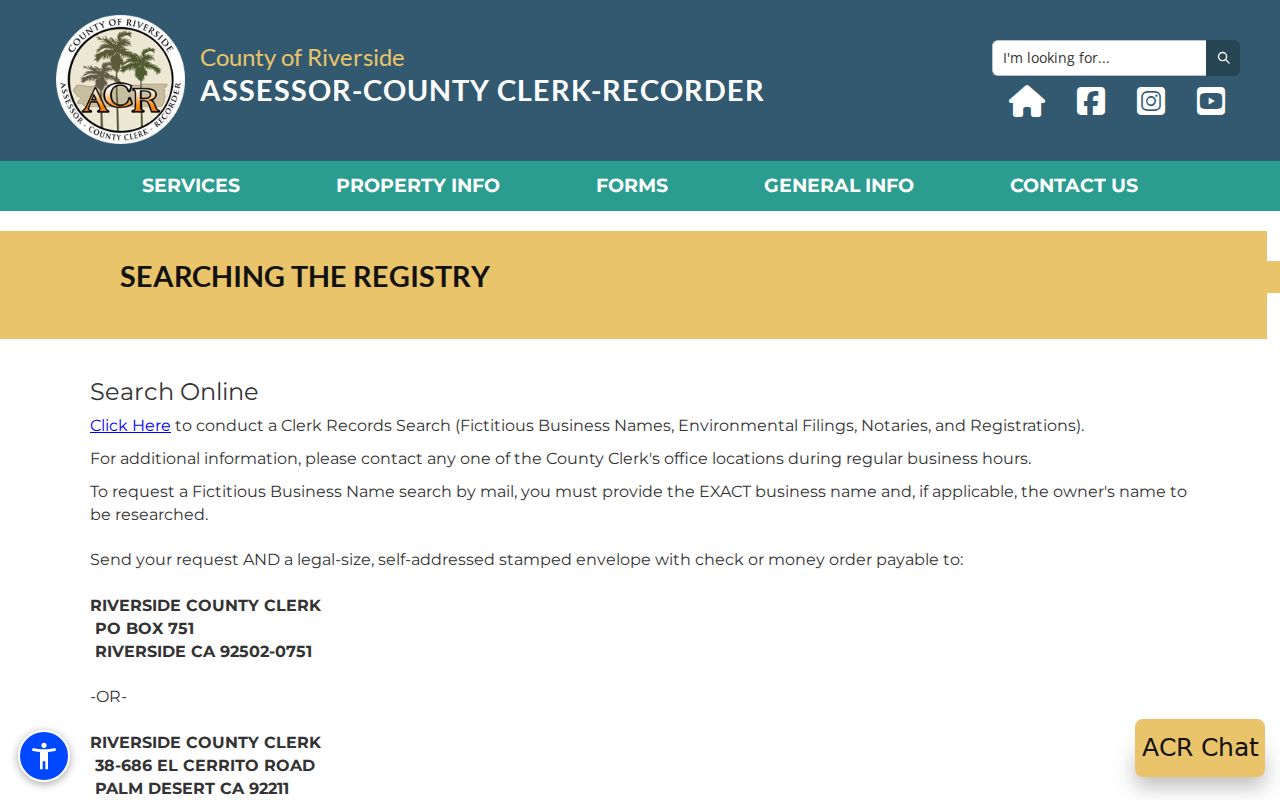
A registry screen can add a local business connection, while land history still requires the Recorder's instrument and legal description.
Beaumont Directory Records and Occupancy
Ownership and occupancy are different trails. A Beaumont criss-cross directory can associate a name or business with an address, while the deed chain shows a recorded transfer. The verified local sample lists 38021 US Highway 60 in 1976, 1980, 1985, and 1992. Pappy's Bait & Tackle and Rice B J recur through 1985, Palmer A W appears from 1980 through 1992, and Statewide Towing appears in 1992.
The extract is valuable because it is local and dated, but it does not establish a complete library run or a guaranteed occupant history. The entries do not visibly show every household field. Compare them with the APN, deed chain, census, newspaper, obituary, and city permit trail. A missing line can mean a move, an unlisted entry, a gap in the collection, or a spelling change.
The official Beaumont Phase I ESA is the source for that cited sample. The broader collection methods belong on the Beaumont city directory page.
Beaumont Past Residents in Census
Federal population schedules released through 1950 give a household snapshot at a census date. A directory from an adjacent year can show a street or name between those snapshots. Search by person first, then browse the enumeration district or street when surname indexing fails. Record the exact address, household members, ages or relationships as printed, and the census date.
- Find the closest available Beaumont directory or reverse-directory entry and copy its address exactly.
- Locate the corresponding census household and compare the street, names, and nearby geography.
- Check the next directory year for an address or name change rather than assuming a continuous stay.
- Use a newspaper, obituary, probate file, or deed to explain a departure, death, inheritance, or transfer.
Beaumont's older place labels complicate the search. Riverside County formed in 1893, and Beaumont incorporated in 1912. For earlier records, include San Bernardino and San Diego predecessor-county routes, Summit Station, San Gorgonio, and the Beaumont townsite terms.
Beaumont Past Residents and Probate
Probate can carry a prior owner's trail beyond a deed. Riverside Superior Court's online probate coverage is nearly complete from July 1994 forward. Use a name or, preferably, a known case number to locate petitions, estate events, public named parties, and possible distribution documents. A later recorded distribution deed can connect an estate to land, but an heir's name is not proof that the heir lived there.
Riverside County and CDPH supply birth, death, marriage, and dissolution record routes with different eligibility rules. Informational certified copies are not valid to establish identity. Authorized copies require the qualifying relationship or status and a sworn statement. Confidential marriage copies are limited under Family Code section 509. For a house-history question, a death record or obituary may provide a useful date, while the court and Recorder remain the stronger sources for estate or title facts.
The Riverside vital-certificate page gives county ordering channels, current fees, and mail details.
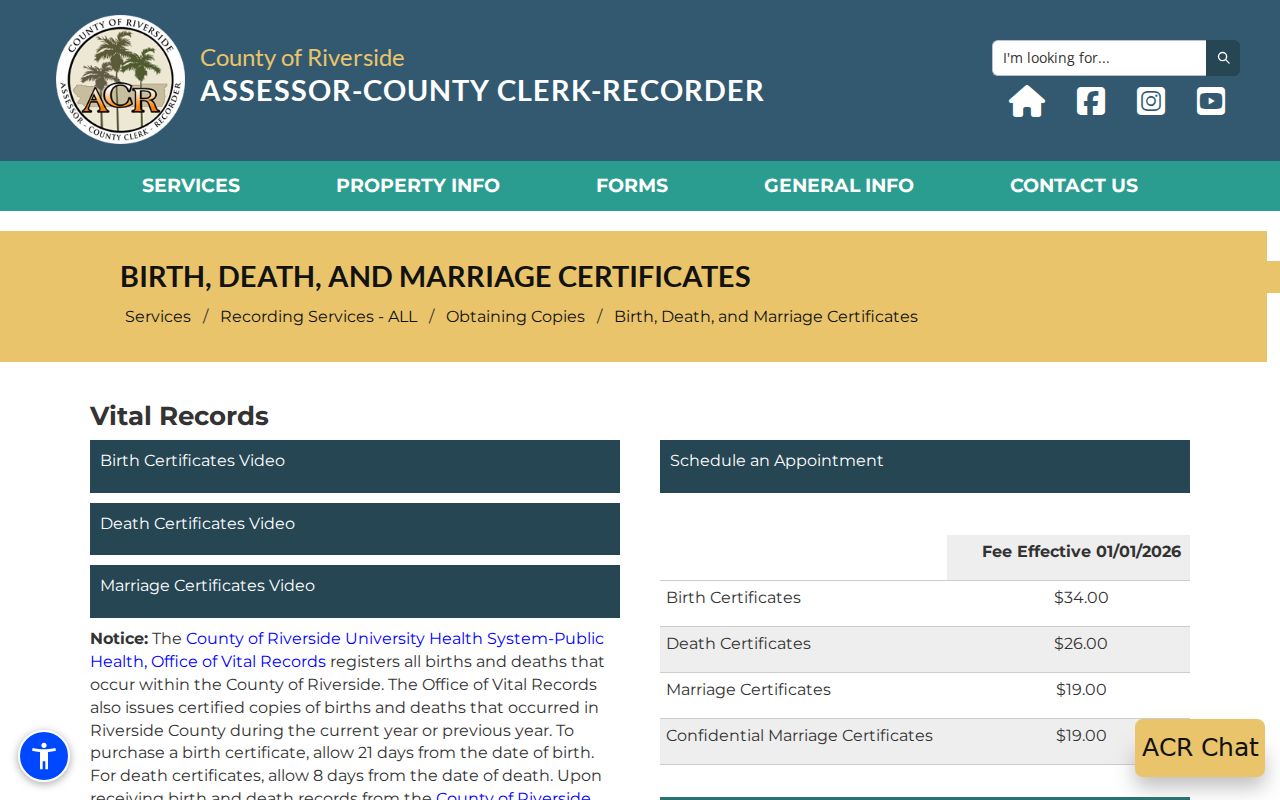
Vital records can explain a person's date or relationship, but the certificate category determines who may receive it and what it proves.
Beaumont Past Residents in Federal Records
Federal court material is a separate branch of the record trail. Riverside County falls in the U.S. District Court for the Central District of California, with the Eastern Division courthouse in Riverside. PACER requires a free account. The official federal price is $0.10 per page or search-result page, generally capped at $3 per document; audio is $2.40, and quarterly charges of $30 or less are waived.
Federal case records may matter when a named person, business, or property appears in a public filing, but a federal case is not a residence record. Search by the correct court and case context, then keep the docket or document identifier. Electronic filing began January 1, 2007 for Central District criminal cases and January 1, 2008 for civil cases, so earlier material may require archive or courthouse-terminal routes. For a different historical court branch, California Courts announced a Riverside appellate-record retention action in 2026; the official notice explains what older original proceedings may no longer be available and what remains at the State Archives.
The PACER access route explains account and search access.
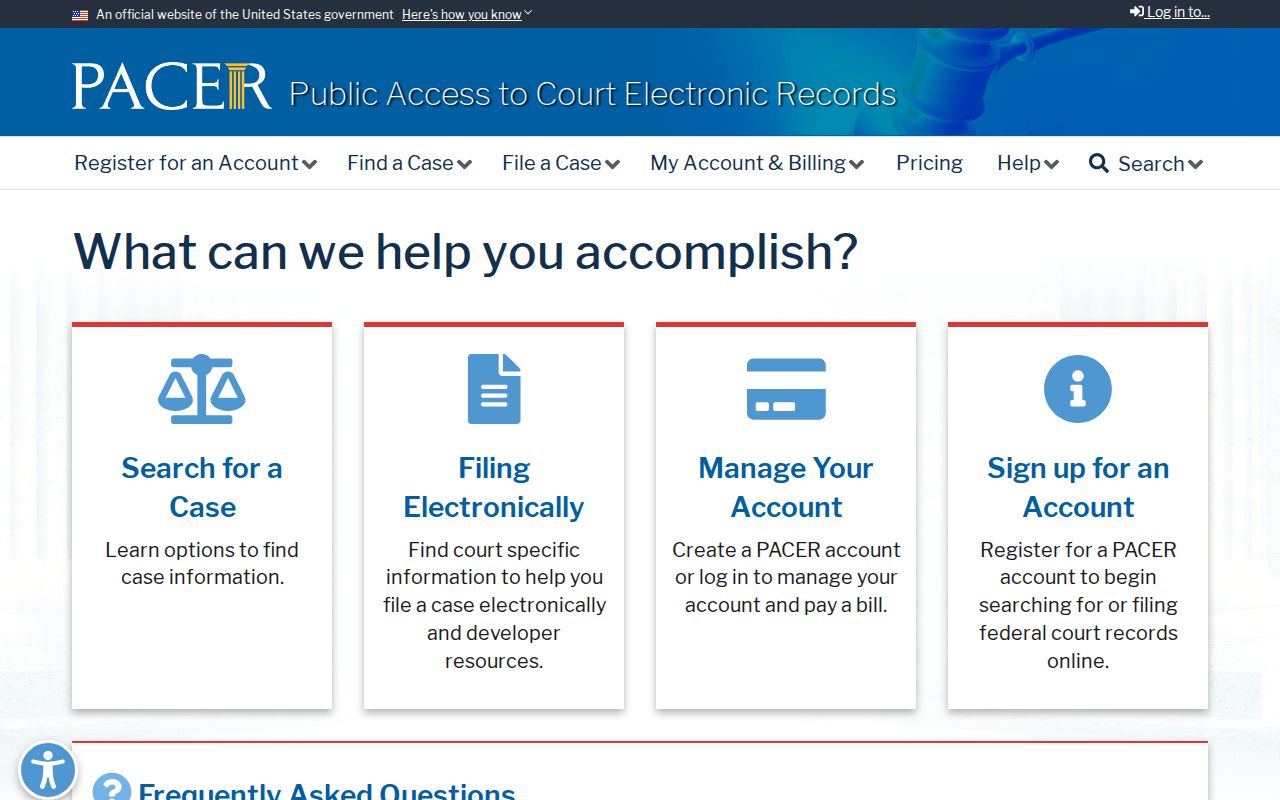
PACER can add a federal docket clue to a prior-resident inquiry when the person or property is already anchored.
The Central District PACER court route should be selected when the search concerns a Riverside federal case rather than a Riverside Superior Court trial file.
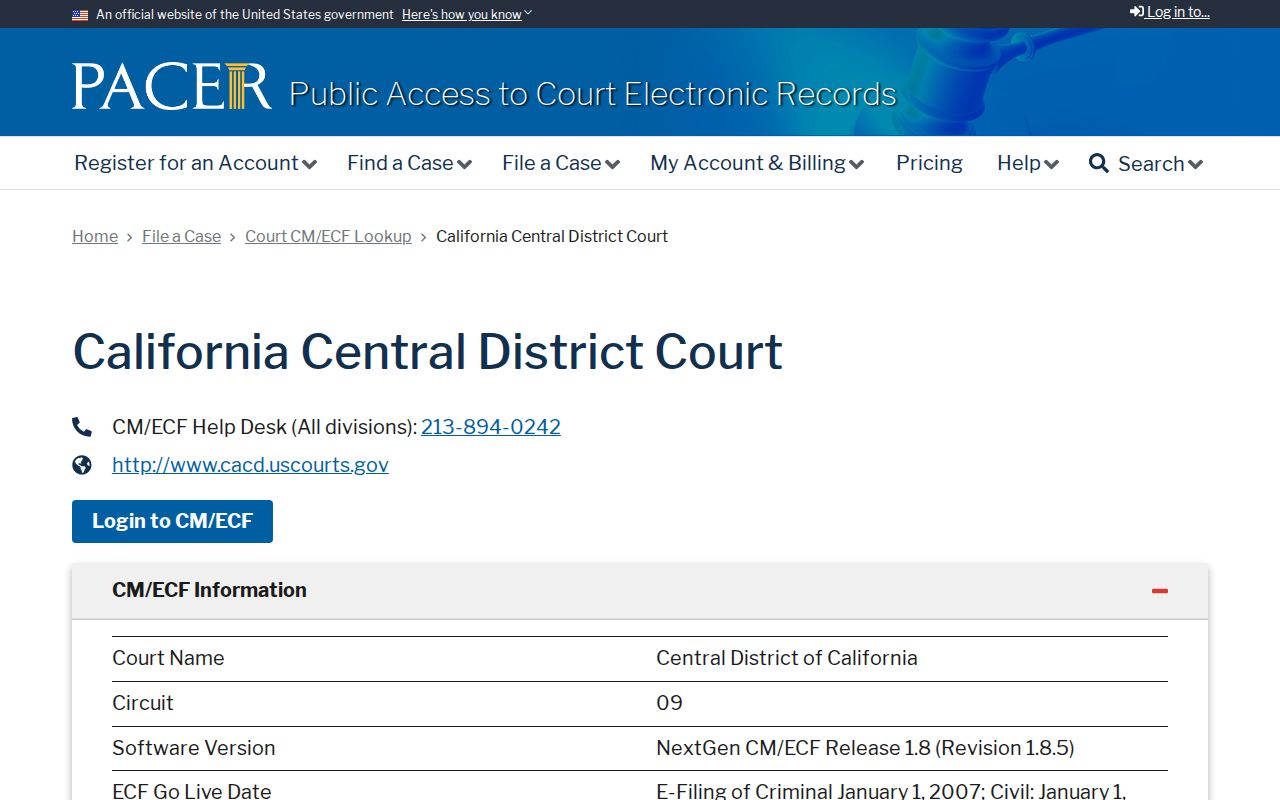
A court document still needs a date, party role, and source note before it is connected to an address history.
Beaumont House History Across Eras
Beaumont's record geography changes across the town's growth. Summit Station appears in local history in 1866, a Southern Pacific telegraph office in 1876, San Gorgonio in 1884, the townsite in San Bernardino County in 1887, Riverside County formation in 1893, and city incorporation in 1912. The same modern address may therefore require different county, community, and municipal terms depending on the year.
Downtown around Sixth Street and Beaumont Avenue has a historic core of civic and religious landmarks. Newer specific-plan areas use subdivision maps, deeds, permits, and CFD records. Search both the current plan name and older terms such as Oak Valley, SCPGA, or Heartland when a record predates a development rename.
The Robert J. Fitch County Archives holds property ownership and valuation material, mining and water interests, Board of Supervisors actions, maps, plats, mortgagees, notices of action, and related categories from 1893. Appointments are Tuesday through Thursday from 9 a.m. to noon at the county route.
Beaumont Past Households and Permits
City Planning can add a physical-history layer. Beaumont Planning GIS returns zoning by address or APN. CSS shows selected application and plan-review status through an account tied to the submitting email. The city Public Records Center accepts online, written, and verbal requests for described records, and its ten-calendar-day response explains how a request will be handled. Give the address, APN, date range, permit type, and desired format.
A permit or planning record may show an applicant, a project, or a change to a parcel. It does not by itself identify every person who lived there. Pair the date with the deed chain, directory entry, census, or newspaper before calling a physical change a household change.
The Beaumont records center is the fallback when a city file is not visible through the planning portal.
Beaumont Past Residents Need Care
A prior owner, prior directory name, heir, business, and census household are not interchangeable. State the exact relationship shown by each source and note the date. If the online index stops, change channels. If a directory year is not verified, ask the library. If an old address does not match the APN, check maps and legal descriptions. If a name is common, add a stable identifier instead of guessing.
Lawful house history. Beaumont past-resident research is appropriate for genealogy, preservation, estate questions, and personal history. Do not use a deed, directory, court file, or obituary to stalk, threaten, intimidate, impersonate, or harass a living person.
The strongest conclusion is often modest: a named record connected a party or listing to an address in a stated year. That is enough to guide the next source without turning a historical clue into a claim about present residence.